The BBC's David Loyn had conducted interviews with Taleban commanders fighting British troops in the southern Afghan province of Helmand. He explored reasons why the Taleban are so ferociously battling the foreign troops and Karzai's government. After the publication of the report last week, he now answers questions on the Taleban and their motives. I found it very interesting although I disagree with the correspondent's positive portrayal of the Taleban. I'll appreciate your comments in this regard. Following is the URL address, or simply click on the Q&A about Taleban written above:
http://news.bbc.co.uk/1/hi/talking_point/6091532.stm
Sunday, October 29, 2006

Saturday, September 16, 2006
Afghanistan's turbulent history
The events of September 11 and what has happened since have made people understand that even a small, distant and far away country like Afghanistan cannot be left to break up into anarchy and chaos without consequences for the whole world. Lakhdar Brahimi, special adviser to UN Secretary General Kofi Annan
The rising insurgency mirrors Afghanistan’s turbulent history marked by centuries of conflict and violence. Bridging trade routes between the Indian subcontinent, Persian Gulf and Central Asia, Afghanistan has persistently suffered foreign interference and invasions. But despite suffering perpetual instability and anarchy, its rugged terrain and people’s patriotic and religious zeal have helped preserve the nation’s independence.
It seems unusual that conquerors as prominent as Alexander the Great and Genghis Khan suffered greatly to invade and control this small nation. It is also interesting to note that invading Afghanistan has caused many great empires to collapse.
The British in the 1800s and the Soviets in the late 1900s paid harsh prices for Afghanistan’s occupation. The British suffered three humiliating defeats, while the Russians were forced to withdraw and their empire collapsed right afterwards. The US-led coalition are therefore pursuing a battle of “hearts and minds” to prove themselves as peacekeepers, not occupiers, in order to avoid a similarly fatal fate.
Afghanistan is where Tsarist Russia and British Empire played the Great Game – but neither side succeeded. To prevent Russian influence, the British India East Company invaded Afghanistan in 1838 to oust King Dost Muhammad and install its own satellite regime in Kabul. But the occupation marked the beginning of a disastrous chapter in British military history. Only one out of the 16,000 British troops survived in retreat in the first Anglo-Afghan war. Afghanistan was then nicknamed “graveyard for foreign invaders”.
The lesson learned from all foreign invasion of Afghanistan is that it is easy to conquer the country, but rather difficult, and sometimes impossible, to control it, or get out of it with success.
But to avenge the massacre, Britain repeated the error of invading Afghanistan in 1878 – triggering the second Anglo-Afghan war. The British army conquered many Afghan provinces with ease, including the capital. But a similarly calamitous doom descended on the British army when a nationwide jihad was declared against them.
Nearly half of the British army of 2,600 were annihilated only in the southern city of Maiwand, a district of Helmand Province, where 3,300 British troops are now stationed.
The Taleban are now rekindling the past hostilities to turn the public against the British forces in the province. "The British have been defeated in the past. Afghans are not scared of death. The British are an old enemy of Afghanistan,” a local Taleban is quoted as urging people to fight the British in the region.
Afghanistan has always been an ultra conservative and hyper religious nation. Any attempts of modernisation have met stiff domestic opposition. Having declared independence from Great Britain in 1919, King Amanullah embarked on radical reforms aimed at curtailing the power of the clergy, imposing official dress code, and promoting democracy and women rights – efforts censured as acts of westernisation that led to his deposition in 1929. His successors remained cautious at brining any social changes.
Ironically, the resistance deprived Afghans of political and economic growth. According to Mark Urban, author of War in Afghanistan, Afghans failed to avail themselves of an infrastructure, an efficient civil service, an independent judiciary, an integrated national railway network and well-organised armed forces the British left behind where they colonised.
In 1893, the British also imposed the Durand Line treaty separating vast Afghan territories that now belong to Pakistan. Although Afghan leaders have repeatedly refused to accept the Durand Line as official boundary between the two nations before and after the expiration of the treaty in 1993, absence of a central government in Kabul has denied the country return of its lost territories.
Since the establishment of Pakistan in 1947, the Pakistani military and intelligence agency (ISI) have relentlessly strived to destabilise and weaken Afghanistan to maintain its national security and territorial integrity. “Military hardliners called me a 'security threat' for promoting peace in South Asia and for supporting a broad-based government in Afghanistan,” said Benazir Bhutto, former Pakistani Prime Minister.
The Durand Line has recently come to international limelight as the areas now under Pakistan’s control (Baluchistan, North West Frontier Province of Pakistan and Federal Administrative Tribal Areas) have turned into headquarters for Islamic extremists and al-Qaeda activists. Pakistani President Parvez Musharraf’s call for building fences along the borders in 2005 met fierce opposition of Pashtun tribes on both sides of borders, as well as that of the Afghan government. “Barbed wire is a symbol of hatred, not friendship and hence it cannot stop terrorism,” Afghan President Hamed Karzai pointed out.
Afghanistan’s independence from Britain followed five decades of relative peace and stability – which ended with the overthrow of King Zaher Shah in 1973.
Zaher Shah introduced a new constitution in 1964 stipulating freedom of expression and equal gender rights for the first time in history. Although Zaher’s 41-year reign is described as the most tranquil era in Afghan history, it was marred by intense economic mismanagement and political negligence. Thousands died in severe droughts in the north, while he was building palaces in Kabul and Italy. His weak administration also paved the way for Russian influence that led to an invasion in 1979.
Daud Khan’s coup d'état of 1973 put an end to the period of monarchy. He established a republican, devised a development marshal plan and sought closer relations with western nations - arousing the wrath of Russians. “I would be the happiest to light my American cigarette with Russian matches,” was his foreign policy motto. In his last meeting with Daud in April 1977 in Moscow, Russian President Leonid Brezhnev complained about Daud’s permission of experts and aid workers from NATO member countries in Afghanistan. Daud is quoted as replying:
“We will never allow you to dictate to us how to run our country and whom to employ in Afghanistan. How and where we employ the foreign experts will remain the exclusive prerogative of the Afghan state. Afghanistan shall remain poor, if necessary, but free in its acts and decisions.”
His souring relations with Russia led to his assassination by the communist People’s Democratic Party of Afghanistan (PDPA) in April 1978.
PDPA’s bloody revolution saw the killing of thousands of the intelligentsia, Islamic scholars, university professors, leaders of ethnic minorities and civilians. Despite understanding of people’s deep cultural and religious sensitivities, they tempted fate by imposing a Marxist system of social reforms and welcomed the dispatch of Russian troops inside the country – instigating nationwide rebellion and mass migration of people to neighbouring countries, mainly to Pakistan and Iran.
The Afghan resistance coincided with the climax of the Cold War. As John K. Cooley, author of Unholy Wars: Afghanistan, America and International Terrorism, points out: “The tacit consensus in USA was that the Muslim religion, fundamentally anti-Communist, if translated to politics, could be harnessed as a mighty force to oppose Moscow in the Cold War.”
The United States therefore forged an alliance with Pakistan’s then military government, which sought to topple the Russian-backed regime in Kabul and install its own mercenaries to enable expansion of Pakistan’s trade routes to Central Asia.
America thus fostered close ties with Islamic extremists and provided them with massive heavy and light military hardware – a relationship which went dreadfully wrong afterwards and led to creation of terrorist organisations allegedly responsible for many recent terror activities, including the 9/11 attacks on America.
Thousands of Islamists from the Arab world joined the Afghan mujahedin. According to John Cooley, CIA, unable to continue funding the mojahedin, promoted illicit drugs production and trade in tribal areas of Pakistan and remote Afghan provinces to keep the battle running – a policy that led to flourishing illegal business the world is striving to eliminate now. Thus Afghanistan changed into a hub for international drugs mafia and Arab fundamentalists, including al-Qaeda leader Osama Bin Laden.
The 300,000 Russian troops and an annual aid of 3bn dollars failed to help Kabul suppress the mounting revolt. Thus they withdrew in 1989 in utter humiliation, leaving behind 15,000 deaths. The Afghan occupation is termed in Russian history as the beginning of the Union’s collapse. Author of Embattled America Richard Crockatt describes Afghanistan as the “Soviet Union’s Vietnam” – both in the failure on the battlefield and the collapse of consensus at home. The difference, according to him, was that the United States could afford such a failure, the Soviet Union could not.
Soon after Russian pull-out in 1989, America turned its back on Afghanistan. Kabul government fell in 1992, but disunity between mujahedin factions led to devastating civil war. And to depose the anti-Pakistan regime in Kabul, Pakistan hatched the monster of the Taleban in 1994. Taleban were an alliance of students at Pakistani madrassas (religious seminaries), previous Afghan resistance fighters, Arab extremist Islamists and even a handful of Chechen and Chinese Islamic fundamentalists. Al-Qaeda leader Osama Bin Laden, who had left Afghanistan in 1990, returned in 1996.
At first, the Taleban won the support of Pashtun population in the south by promising them peace, security and the rule of sharia law. But after they captured Kabul in 1996, they started a series of unprecedented atrocities and severe punishments – such as amputation of hands for theft, stoning to death for adultery, execution for sodomy, and flogging for those breaching their code of dress. They also banned music, movie and still pictures, certain sports, and worst of all, education and work for women. They destroyed two gigantic Buddha statues in Bamian Province in early 2001.
Although the world community had not recognised the Taleban government – with the exception of Pakistan, Saudi Arabia and United Arab Emirates – it was not until the 9/11 incident that the world reacted to oust the brutal regime.
Following 9/11, America called on the Taleban to hand over Bin Laden, allegedly responsible for the assault. But the Taleban’s refusal led the US invasion of Afghanistan in October 2001.
The US heavy air assault supported by ground troops of Northern Alliance, the sole anti-Taleban forces left, drove the Taleban out of Kabul in no time. But the Taleban were never eliminated. Some fled the country and took sanctuary in Pakistan, while others took off their turbans and melted into villages in the south and east.
They established safe havens in the Pakistani tribal areas and continued to regroup, recruit fighters, raise funds and re-supply their forces. But America failed to pressure Pakistan to crack down on their activities. Thus they regrouped and are now back to take revenge.
Hamed Karzai, appointed head of the Interim Authority at the Bonn Conference in 2001, won Afghanistan’s first free presidential elections in 2004. Yet five years since the fall of the Taleban, the president, with enormous international economic and military backing, is still struggling to establish nationwide security, promote national unity, boost shattered economy, disarm local warlords and tackle drugs production.
The rising insurgency mirrors Afghanistan’s turbulent history marked by centuries of conflict and violence. Bridging trade routes between the Indian subcontinent, Persian Gulf and Central Asia, Afghanistan has persistently suffered foreign interference and invasions. But despite suffering perpetual instability and anarchy, its rugged terrain and people’s patriotic and religious zeal have helped preserve the nation’s independence.
It seems unusual that conquerors as prominent as Alexander the Great and Genghis Khan suffered greatly to invade and control this small nation. It is also interesting to note that invading Afghanistan has caused many great empires to collapse.
The British in the 1800s and the Soviets in the late 1900s paid harsh prices for Afghanistan’s occupation. The British suffered three humiliating defeats, while the Russians were forced to withdraw and their empire collapsed right afterwards. The US-led coalition are therefore pursuing a battle of “hearts and minds” to prove themselves as peacekeepers, not occupiers, in order to avoid a similarly fatal fate.
Afghanistan is where Tsarist Russia and British Empire played the Great Game – but neither side succeeded. To prevent Russian influence, the British India East Company invaded Afghanistan in 1838 to oust King Dost Muhammad and install its own satellite regime in Kabul. But the occupation marked the beginning of a disastrous chapter in British military history. Only one out of the 16,000 British troops survived in retreat in the first Anglo-Afghan war. Afghanistan was then nicknamed “graveyard for foreign invaders”.
The lesson learned from all foreign invasion of Afghanistan is that it is easy to conquer the country, but rather difficult, and sometimes impossible, to control it, or get out of it with success.
But to avenge the massacre, Britain repeated the error of invading Afghanistan in 1878 – triggering the second Anglo-Afghan war. The British army conquered many Afghan provinces with ease, including the capital. But a similarly calamitous doom descended on the British army when a nationwide jihad was declared against them.
Nearly half of the British army of 2,600 were annihilated only in the southern city of Maiwand, a district of Helmand Province, where 3,300 British troops are now stationed.
The Taleban are now rekindling the past hostilities to turn the public against the British forces in the province. "The British have been defeated in the past. Afghans are not scared of death. The British are an old enemy of Afghanistan,” a local Taleban is quoted as urging people to fight the British in the region.
Afghanistan has always been an ultra conservative and hyper religious nation. Any attempts of modernisation have met stiff domestic opposition. Having declared independence from Great Britain in 1919, King Amanullah embarked on radical reforms aimed at curtailing the power of the clergy, imposing official dress code, and promoting democracy and women rights – efforts censured as acts of westernisation that led to his deposition in 1929. His successors remained cautious at brining any social changes.
Ironically, the resistance deprived Afghans of political and economic growth. According to Mark Urban, author of War in Afghanistan, Afghans failed to avail themselves of an infrastructure, an efficient civil service, an independent judiciary, an integrated national railway network and well-organised armed forces the British left behind where they colonised.
In 1893, the British also imposed the Durand Line treaty separating vast Afghan territories that now belong to Pakistan. Although Afghan leaders have repeatedly refused to accept the Durand Line as official boundary between the two nations before and after the expiration of the treaty in 1993, absence of a central government in Kabul has denied the country return of its lost territories.
Since the establishment of Pakistan in 1947, the Pakistani military and intelligence agency (ISI) have relentlessly strived to destabilise and weaken Afghanistan to maintain its national security and territorial integrity. “Military hardliners called me a 'security threat' for promoting peace in South Asia and for supporting a broad-based government in Afghanistan,” said Benazir Bhutto, former Pakistani Prime Minister.
The Durand Line has recently come to international limelight as the areas now under Pakistan’s control (Baluchistan, North West Frontier Province of Pakistan and Federal Administrative Tribal Areas) have turned into headquarters for Islamic extremists and al-Qaeda activists. Pakistani President Parvez Musharraf’s call for building fences along the borders in 2005 met fierce opposition of Pashtun tribes on both sides of borders, as well as that of the Afghan government. “Barbed wire is a symbol of hatred, not friendship and hence it cannot stop terrorism,” Afghan President Hamed Karzai pointed out.
Afghanistan’s independence from Britain followed five decades of relative peace and stability – which ended with the overthrow of King Zaher Shah in 1973.
Zaher Shah introduced a new constitution in 1964 stipulating freedom of expression and equal gender rights for the first time in history. Although Zaher’s 41-year reign is described as the most tranquil era in Afghan history, it was marred by intense economic mismanagement and political negligence. Thousands died in severe droughts in the north, while he was building palaces in Kabul and Italy. His weak administration also paved the way for Russian influence that led to an invasion in 1979.
Daud Khan’s coup d'état of 1973 put an end to the period of monarchy. He established a republican, devised a development marshal plan and sought closer relations with western nations - arousing the wrath of Russians. “I would be the happiest to light my American cigarette with Russian matches,” was his foreign policy motto. In his last meeting with Daud in April 1977 in Moscow, Russian President Leonid Brezhnev complained about Daud’s permission of experts and aid workers from NATO member countries in Afghanistan. Daud is quoted as replying:
“We will never allow you to dictate to us how to run our country and whom to employ in Afghanistan. How and where we employ the foreign experts will remain the exclusive prerogative of the Afghan state. Afghanistan shall remain poor, if necessary, but free in its acts and decisions.”
His souring relations with Russia led to his assassination by the communist People’s Democratic Party of Afghanistan (PDPA) in April 1978.
PDPA’s bloody revolution saw the killing of thousands of the intelligentsia, Islamic scholars, university professors, leaders of ethnic minorities and civilians. Despite understanding of people’s deep cultural and religious sensitivities, they tempted fate by imposing a Marxist system of social reforms and welcomed the dispatch of Russian troops inside the country – instigating nationwide rebellion and mass migration of people to neighbouring countries, mainly to Pakistan and Iran.
The Afghan resistance coincided with the climax of the Cold War. As John K. Cooley, author of Unholy Wars: Afghanistan, America and International Terrorism, points out: “The tacit consensus in USA was that the Muslim religion, fundamentally anti-Communist, if translated to politics, could be harnessed as a mighty force to oppose Moscow in the Cold War.”
The United States therefore forged an alliance with Pakistan’s then military government, which sought to topple the Russian-backed regime in Kabul and install its own mercenaries to enable expansion of Pakistan’s trade routes to Central Asia.
America thus fostered close ties with Islamic extremists and provided them with massive heavy and light military hardware – a relationship which went dreadfully wrong afterwards and led to creation of terrorist organisations allegedly responsible for many recent terror activities, including the 9/11 attacks on America.
Thousands of Islamists from the Arab world joined the Afghan mujahedin. According to John Cooley, CIA, unable to continue funding the mojahedin, promoted illicit drugs production and trade in tribal areas of Pakistan and remote Afghan provinces to keep the battle running – a policy that led to flourishing illegal business the world is striving to eliminate now. Thus Afghanistan changed into a hub for international drugs mafia and Arab fundamentalists, including al-Qaeda leader Osama Bin Laden.
The 300,000 Russian troops and an annual aid of 3bn dollars failed to help Kabul suppress the mounting revolt. Thus they withdrew in 1989 in utter humiliation, leaving behind 15,000 deaths. The Afghan occupation is termed in Russian history as the beginning of the Union’s collapse. Author of Embattled America Richard Crockatt describes Afghanistan as the “Soviet Union’s Vietnam” – both in the failure on the battlefield and the collapse of consensus at home. The difference, according to him, was that the United States could afford such a failure, the Soviet Union could not.
Soon after Russian pull-out in 1989, America turned its back on Afghanistan. Kabul government fell in 1992, but disunity between mujahedin factions led to devastating civil war. And to depose the anti-Pakistan regime in Kabul, Pakistan hatched the monster of the Taleban in 1994. Taleban were an alliance of students at Pakistani madrassas (religious seminaries), previous Afghan resistance fighters, Arab extremist Islamists and even a handful of Chechen and Chinese Islamic fundamentalists. Al-Qaeda leader Osama Bin Laden, who had left Afghanistan in 1990, returned in 1996.
At first, the Taleban won the support of Pashtun population in the south by promising them peace, security and the rule of sharia law. But after they captured Kabul in 1996, they started a series of unprecedented atrocities and severe punishments – such as amputation of hands for theft, stoning to death for adultery, execution for sodomy, and flogging for those breaching their code of dress. They also banned music, movie and still pictures, certain sports, and worst of all, education and work for women. They destroyed two gigantic Buddha statues in Bamian Province in early 2001.
Although the world community had not recognised the Taleban government – with the exception of Pakistan, Saudi Arabia and United Arab Emirates – it was not until the 9/11 incident that the world reacted to oust the brutal regime.
Following 9/11, America called on the Taleban to hand over Bin Laden, allegedly responsible for the assault. But the Taleban’s refusal led the US invasion of Afghanistan in October 2001.
The US heavy air assault supported by ground troops of Northern Alliance, the sole anti-Taleban forces left, drove the Taleban out of Kabul in no time. But the Taleban were never eliminated. Some fled the country and took sanctuary in Pakistan, while others took off their turbans and melted into villages in the south and east.
They established safe havens in the Pakistani tribal areas and continued to regroup, recruit fighters, raise funds and re-supply their forces. But America failed to pressure Pakistan to crack down on their activities. Thus they regrouped and are now back to take revenge.
Hamed Karzai, appointed head of the Interim Authority at the Bonn Conference in 2001, won Afghanistan’s first free presidential elections in 2004. Yet five years since the fall of the Taleban, the president, with enormous international economic and military backing, is still struggling to establish nationwide security, promote national unity, boost shattered economy, disarm local warlords and tackle drugs production.
Saturday, September 09, 2006
Afghanistan proving British Vietnam, British MP says
Afghanistan could prove a British Vietnam unless we pull out from the dangerous south immediately, a senior British politician has warned.
Labour MP Paul Flynn in an exclusive interview described the current international campaign in Afghanistan as a “mission impossible”, and sharply criticised US-led counter insurgency and counter narcotics policies in the country.
Support for the Afghan war is dramatically diminishing amongst British public and politicians as the country four years after the ouster of the Taleban is still teetering on the brink of anarchy and collapse.
“We are sending troops to defend Karzai, and his brother is a crook. If that becomes publicly recognised, the support for the war will drain away. That is a reality. We are propping up a very nasty regime. Not Karzai himself, but all his henchmen who run the provinces.”
Mr Paul, who served as government’s spokesman for social security before being elected to the House of Commons, believes the Afghan mission could not succeed because of “ill-conceived” US strategies. “Vietnam started a small thing. And there was assumption by the Americans that they could tell a country what kind of system they should have and there is the same arrogance there. They are trying to impose a system which is in America.”
He ascribed the recent surge in insurgency and violence to “counter-productive drug strategy” being implemented and warned of dire consequences if current forced eradication efforts are not halted. “It is an idiocy and it’s always been and idiocy. I said in 2001 that getting rid of poppies was idiotic… I would rather go to Afghanistan to get rid of al-Qaeda, but I have always been against poppy eradication. And if we go on we will lose lives.”
His scathing remarks come as the British troops recently sustained heavy casualties amid the deadliest Taleban offensive since the troops’ deployment to the turbulent province of Helmand last year.
He emphasised that drug problem could not be tackled on the supply side and called for robust international effort to reduce the demand in America and Europe. “This year there will be more heroin – the biggest harvest ever – yet the price of heroin on the streets of Britain is the lowest it has ever been. And it’s absolutely no good,” he pointed out. “Let’s say if they reduce the production by half in Afghanistan as they did something similar in Columbia, and what happened was that coca was the produced in Peru and Bolivia… It is still failing in Columbia. They have spent 4.7bn dollars in Columbia, but coca production increased by 20 per cent last year.”
Mr Paul, who has also worked as member of European Parliament, backs licensing opium cultivation for production of medicines – a proposal by the Senlis Council, an international security and development think tank. He is strongly against US drug policies being pursued in Afghanistan. He says the drug policy in Afghanistan is a “repeating error” of Columbia – what he termed as “Columbiaisation of Central Asia”.
The current eradication campaign combined with US planes bombing villages, according to Paul, has moved the local population closer to the Taleban.
Paul describes Afghanistan as a rouge nation that could not be run as a unified country. “To come to the sober conclusion, it can’t be run as a unified country. It will always be run by warlords, cooks and so on. And the best thing what America must consider is to deal with crooks.”
Paul recalled Russian MP’s warning at the outset of US invasion that America and its allies would face the similar fate Russia met in the 1980s. “When we first moved in, a Russian MP laughed and said well you conquered Afghanistan. He said we conquered Afghanistan in six days and we were there for ten years, and we left, 15000 Russian troops killed.” He also noted that there was a whole series of 200 years of invading armies coming in and leaving their death bodies behind – a calamitous fate, according him, awaiting foreign troops in the country at present.
British Secretary of Defence John Reid at his trip to Afghanistan early this year said that his troops would come back within three years “without firing a single shot”. Describing his remarks as “idiotic”, Paul said: “In any conflicts we go through this process where everyone underestimates the problem. In the First World War we said we would win by Christmas, and we were there for four years then.”
He also questioned coalition forces’ claims the casualties were Taleban fighters and said that they could be civilians. Increase in the number of civilian casualties is said to be another factor changing public opinion against foreign troops in Afghanistan. Mr Paul warned that consequences would be terrible if civilian casualties were not avoided in future. “They can’t win the war without the support of the local people,” he said.
Asked whether Pakistani President Parvez Musharraf was doing enough to crack down on Islamic extremists and terrorist elements on its soil, he replied: “I don’t see what advantage would be for him to have trouble and instability on its borders.” He however pointed out that while Musharraf had reacted on madrassas, he had yet to react on trainees.
He also criticised Afghan President Hamed Karzai for appointing “nasty officials” in key positions. “They are trying to strengthen the rule of Karzai and that seems another mission impossible, because he has appointed all these crooks to run this show.”
Paul called for immediate withdrawal of British troops from the volatile province of Helmand. Asked who could fill the vacuum of power to avoid a Taleban comeback, he said: “I don’t see a threat of the Taleban comeback. The Taleban are coming because Americans are there… I don’t think the Taleban need a base now or al-Qaeda needs one. They can run their operation from Somalia, Indonesia or Iran. There is no deterrent.”
When asked whether a British pull-out would mean British soldiers who died in the conflict so far died in vain, he replied: “Yes, they died in vain. So we mustn’t say we should wait for others to die in vain.”
Mr Paul criticised his government of following “flawed” US policies in Afghanistan and Iraq. “They also wasted lives in Iraq. If we had not followed George Bush into Iraq, 110 British would not have died in Iraq. But did they die in vain? Yes, they did die in vain. They achieved nothing. We are tied in to American policy, and American policy on drugs is columbiaisation.”
Labour MP Paul Flynn in an exclusive interview described the current international campaign in Afghanistan as a “mission impossible”, and sharply criticised US-led counter insurgency and counter narcotics policies in the country.
Support for the Afghan war is dramatically diminishing amongst British public and politicians as the country four years after the ouster of the Taleban is still teetering on the brink of anarchy and collapse.
“We are sending troops to defend Karzai, and his brother is a crook. If that becomes publicly recognised, the support for the war will drain away. That is a reality. We are propping up a very nasty regime. Not Karzai himself, but all his henchmen who run the provinces.”
Mr Paul, who served as government’s spokesman for social security before being elected to the House of Commons, believes the Afghan mission could not succeed because of “ill-conceived” US strategies. “Vietnam started a small thing. And there was assumption by the Americans that they could tell a country what kind of system they should have and there is the same arrogance there. They are trying to impose a system which is in America.”
He ascribed the recent surge in insurgency and violence to “counter-productive drug strategy” being implemented and warned of dire consequences if current forced eradication efforts are not halted. “It is an idiocy and it’s always been and idiocy. I said in 2001 that getting rid of poppies was idiotic… I would rather go to Afghanistan to get rid of al-Qaeda, but I have always been against poppy eradication. And if we go on we will lose lives.”
His scathing remarks come as the British troops recently sustained heavy casualties amid the deadliest Taleban offensive since the troops’ deployment to the turbulent province of Helmand last year.
He emphasised that drug problem could not be tackled on the supply side and called for robust international effort to reduce the demand in America and Europe. “This year there will be more heroin – the biggest harvest ever – yet the price of heroin on the streets of Britain is the lowest it has ever been. And it’s absolutely no good,” he pointed out. “Let’s say if they reduce the production by half in Afghanistan as they did something similar in Columbia, and what happened was that coca was the produced in Peru and Bolivia… It is still failing in Columbia. They have spent 4.7bn dollars in Columbia, but coca production increased by 20 per cent last year.”
Mr Paul, who has also worked as member of European Parliament, backs licensing opium cultivation for production of medicines – a proposal by the Senlis Council, an international security and development think tank. He is strongly against US drug policies being pursued in Afghanistan. He says the drug policy in Afghanistan is a “repeating error” of Columbia – what he termed as “Columbiaisation of Central Asia”.
The current eradication campaign combined with US planes bombing villages, according to Paul, has moved the local population closer to the Taleban.
Paul describes Afghanistan as a rouge nation that could not be run as a unified country. “To come to the sober conclusion, it can’t be run as a unified country. It will always be run by warlords, cooks and so on. And the best thing what America must consider is to deal with crooks.”
Paul recalled Russian MP’s warning at the outset of US invasion that America and its allies would face the similar fate Russia met in the 1980s. “When we first moved in, a Russian MP laughed and said well you conquered Afghanistan. He said we conquered Afghanistan in six days and we were there for ten years, and we left, 15000 Russian troops killed.” He also noted that there was a whole series of 200 years of invading armies coming in and leaving their death bodies behind – a calamitous fate, according him, awaiting foreign troops in the country at present.
British Secretary of Defence John Reid at his trip to Afghanistan early this year said that his troops would come back within three years “without firing a single shot”. Describing his remarks as “idiotic”, Paul said: “In any conflicts we go through this process where everyone underestimates the problem. In the First World War we said we would win by Christmas, and we were there for four years then.”
He also questioned coalition forces’ claims the casualties were Taleban fighters and said that they could be civilians. Increase in the number of civilian casualties is said to be another factor changing public opinion against foreign troops in Afghanistan. Mr Paul warned that consequences would be terrible if civilian casualties were not avoided in future. “They can’t win the war without the support of the local people,” he said.
Asked whether Pakistani President Parvez Musharraf was doing enough to crack down on Islamic extremists and terrorist elements on its soil, he replied: “I don’t see what advantage would be for him to have trouble and instability on its borders.” He however pointed out that while Musharraf had reacted on madrassas, he had yet to react on trainees.
He also criticised Afghan President Hamed Karzai for appointing “nasty officials” in key positions. “They are trying to strengthen the rule of Karzai and that seems another mission impossible, because he has appointed all these crooks to run this show.”
Paul called for immediate withdrawal of British troops from the volatile province of Helmand. Asked who could fill the vacuum of power to avoid a Taleban comeback, he said: “I don’t see a threat of the Taleban comeback. The Taleban are coming because Americans are there… I don’t think the Taleban need a base now or al-Qaeda needs one. They can run their operation from Somalia, Indonesia or Iran. There is no deterrent.”
When asked whether a British pull-out would mean British soldiers who died in the conflict so far died in vain, he replied: “Yes, they died in vain. So we mustn’t say we should wait for others to die in vain.”
Mr Paul criticised his government of following “flawed” US policies in Afghanistan and Iraq. “They also wasted lives in Iraq. If we had not followed George Bush into Iraq, 110 British would not have died in Iraq. But did they die in vain? Yes, they did die in vain. They achieved nothing. We are tied in to American policy, and American policy on drugs is columbiaisation.”
Friday, September 01, 2006
Afghanistan on brink of narco-state
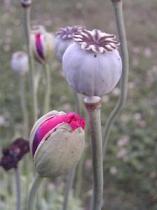 Afghanistan is heading for a bumper opium harvest this year amid growing fears the country could become a narcotics state controlled by drugs cartels and warlords.
 Sharp increases projected demonstrate failure of the British-led counter narcotics mission that has cost more than two billion dollars since the ouster of the Taleban in 2001.
The UN’s annual world drug report 2006 indicates a 22% drop in world drug supply – with substantial reduction in Asia's Golden Triangle, the border zone between Burma, Thailand and Laos that was once the world's main drugs supplier area.
But Afghanistan’s drug situation, according to the executive director of United Nations Office for Drugs and Crime (UNODC), remains “vulnerable to reversal because of mass poverty, lack of security and the fact that authorities have inadequate control over its territory”.
Opium cultivation fell by 21 per cent last year after President Karzai declared jihad against opium poppies. But farmers resumed growing the illicit crop early this year because of worsening economic conditions and international community’s failure to provide them with alternative livelihoods assistance.
The lucrative business is believed to be funding terrorism and fuelling insurgency. “The various militias – local warlords, Taleban groups and others – all have the capacity to exert control over different aspects of the whole production process to access finance for their own purposes,” says Paul Rogers, professor of peace studies at the University of Bradford.
There is substantial evidence that many local farmers have joined the ranks of insurgents, as drug smugglers and the Taleban are said to be offering them protection and cash inducements to continue growing the illicit crop.
“Drug cartels now offer Afghan farmers more protection and incentives than aid agencies,” says Ahmed Rashid, a Pakistani analyst of Afghan affairs and writer of the best seller ‘Taleban’.
The drug economy has also fuelled widespread corruption amongst government officials and undermined the government authority.
An official of Afghan Interior Ministry’s counter narcotics department speaking on condition of anonymity revealed that majority of the ministry’s personnel, local police chiefs and provincial governors are benefiting from the trade. “A network of drug smugglers have created a state within the state and are crippling the government apparatus,” he said, adding that it was too difficult for the president to remove “these corrupt powers”. He also said that many drug smugglers captured were released within days as they had close links with high-ranking officials.
In addition to security, the drug business is seriously hampering the smooth implementation of reconstruction, development and democratisation process as well. “Afghanistan's huge drug trade severely impacts efforts to rebuild the economy, develop a strong democratic government based on rule of law, and threatens regional stability," the US State Department report recently concluded.
Drug addiction is on alarming increase in Afghanistan. A joint survey by UN and Afghan authorities last year estimated nearly one million addicts across the country. This is at a time when addiction treatment facilities in the country are almost non-existent.
Dangers resulting from the multi-billion-dollars trade are not just confined to Afghanistan.
Afghanistan produces 87 percent of world opium production. Almost 90 percent of heroin consumed in Britain, according to Drugscope, originates in Afghanistan. A BBC survey recently learned that three quarters of people in the UK have problem with drugs in their area – almost all of which are smuggled from Afghanistan.
Britain has been leading the counter narcotics campaign in Afghanistan since 2002. But all initiatives taken so far have failed to tackle the booming trade – ranging from soft approaches such as offering compensation and incentives to harsh ones like aerial spraying of poppy fields with herbicide.
“There is no short-term fix, and it at least needs a five or ten-year programme.
You also have to bear in mind the fragile state, and you have to be prepared for the high risks,” warns Labour MP Ann Mcketchin.
She believes the problem could not be addressed only through use of force. “Thailand at one time produced a lot, and now it doesn’t. It is because it established an alternative economy and also provided incentives for farmers to join the legal economy. It is a carrot and stick approach.”
While British officials rule out forced eradication without provision of alternative livelihoods, their American counterparts are emphasising to wipe out opium fields with crop-spraying planes – a controversial approach that not only met stiff opposition of Afghan farmers but also caused health hazards to local communities in 2004when the scheme was tested in Afghanistan for the first time.
But many analysts reject the militaristic approach to tackle the opium crisis and warn of terrible consequences. They argue that such measures have failed in Columbia – where chemical spraying of coca fields made millions of people destitute, yet the price of cocaine is still dropping in world markets.
UN figures suggest that two million Afghans are engaged in opium poppy cultivation. Many farmers say they are willing to stop opium cultivation if they are provided with an alternative source of income. Infertile land, grinding poverty, family debts, chronic droughts and lack of agricultural facilities such as irrigation systems have made them helpless to continue with the illegal trade. Opium prices exceeded 200 dollars per kilogram last year, which means the revenue from opium is at least ten times as much as that from wheat and other licit crops.
Thus the question remains as to how the monster of drugs could be defeated.
To tackle the illegal production and trafficking of opium in Afghanistan, the Senlis Council, a European drug and security policy forum, is proposing licensing Afghan opium for the production of opium-based medicines such as morphine and codeine.
The council’s executive director Emmanuel Reinert says the licensing scheme could not only turn the illegal Afghan opium economy to a “legitimate, medicinal market”, but also help tackle acute deficit of morphine-based painkillers around the world.
Opium licensing system, according to the think tank, would not only contribute to resolving the Afghan opium crisis, but also help boost its shattered economy, facilitate reconstruction process and establish the rule of law by reducing the amount of opium flowing into illegal market and into the hands of insurgents.
The proposal however has yet to meet approval of UK and American officials – who believe that the system could not be implemented successfully under currently inadequate law enforcement agencies in Afghanistan. The officials argue that the central government has not yet established its complete rule in provinces to control the system and avoid diversion of drugs into illegal market.
Although the licensing scheme has been rejected in the past, British officials are urging for reconsideration of the proposal as forced eradication efforts not only failed but recently undermined security and escalated insurgency as well.
Foreign troops are encountering the fiercest insurgency in southern Afghanistan since the fall of the Taleban in 2001. Much of the disaster is blamed on forced eradication drive that has antagonised local farming communities and is believed to have driven farmers into the hands of the Taleban. And if the current militaristic approach is continued without substantial aid to farming communities, Afghanistan is feared to lapse back into anarchy and chaos.
Wednesday, August 30, 2006
Afghanistan in danger of Taleban comeback
 Security in Afghanistan is dramatically deteriorating as resurgent Taleban and al-Qaeda fighters are regaining control over most of southern Afghanistan.
 The nature of insurgency has changed from sporadic attacks by a few hundred Taleban fighters last year to an open warfare led by thousands of Taleban guerrillas this year. Mullah Dadullah, Taleban’s chief commander in the south, claims to have 12,000 armed men and 20 provincial districts under his command.
Massive international efforts have failed to wipe out flourishing drugs trade – allowing the insurgents to enormously benefit from the illicit business and fund their subversive activities.
The question arises as to why Afghanistan is facing resurgent Taleban and mounting violence despite huge international military and financial aid to bring peace and stability to the war-shattered country.
Ill-conceived strategy
The resurgence of Taleban and al-Qaeda fighters almost five years after the US military intervention toppled the regime indicates that the international campaign in Afghanistan is not moving on the right direction, if not failing.
Afghan President Hamed Karzai has recently called on the international coalition to rework its strategy in Afghanistan. His plea comes amid mounting insurgency and violence in the south. NATO’s commander in chief in Afghanistan, General David Richards, has also talked about NATO’s plan to reconsider its strategy in Afghanistan.
US-based Human Rights Watch’s latest report on Afghanistan says that the surge in violence was both predictable and avoidable. According to the report, the US-led coalition has failed to provide ordinary Afghans with political and economic stability – a vacuum exploited by the Taleban and warlords for their own ends.
Analysts criticise the strategy of US-led war on terrorism in Afghanistan and Iraq, reasoning that a military approach could not be a solution to the problem of terrorism, but that the danger should be tackled through effective political administration and eradication of causes of terrorism.
In Afghanistan, the decision to expand NATO forces throughout the country is deemed to have led to a rise in insurgency and instability. “I think the increase of foreign troops in the south, and mistakes in their military operations have caused insecurity in the county, and made the situation worse,” says Hamidullah Tarzi, a former Afghan cabinet minister.
An independent study after the fall of the Taleban found that 80 per cent of ordinary Afghans were backing the new Afghan government as well as presence of international peacekeeping forces.
In sharp contrast, a recent field survey by the Senlis Council revealed that 80 per cent of people in the south were now supportive of the Taleban and were against foreign troops – complaining that the coalition has brought no development to their areas apart from continued fighting and destruction.
According to Ahmed Rashid, a Pakistani analyst of Afghan affairs, the Taleban now offer more protection and incentives to the local population than the international coalition in Afghanistan.
The radical change in public opinion could also be attributed to US harsh military tactics. An Afghan Interior Ministry’s official, requesting anonymity, revealed that many of those killed by US air strikes were civilians not Taleban fighters.
“The increasing number of civilian deaths… has directly contributed to the disintegration of local population’s confidence in the international troops,” said Emmanuel Reinert, executive director of Senlis Council, an international security and development think tank. “The US has lost yet more of the support of the local people with the blood of innocent civilians on their hands.”
Mr Reinert also warned that consequences would be “irreparable” unless the currently forced eradication of poppy crops stopped. “Conflicting drug, development and security policies are making Afghanistan spiral into chaos,” he recently told a press conference in London. “The growing violence shows that the current approach in Afghanistan is simply not working. The international community needs to go back to the drawing board and rework its approach in Afghanistan.”
British military offices have recently expressed worries that coalition’s persistent air strikes and deadly clashes could reawaken memories of Soviet occupation that instigated mass rebellion across the country in the 1980s. “There is a lot of suspicion,” said senior British officer in southern Helmand province. “There is a danger that people will see us as the new Soviets.” These concerns are mounting at a time when American warplanes are relentlessly bombing villages to kill suspected Taleban fighters.
Safe havens in Pakistan
One main reason for the surge in insurgency is that the Taleban were ousted from power after the US air attacks in October 2001, but they have never been totally defeated. Some temporarily laid down arms and disguised as civilians, while majority continued to have a safe haven in Pakistan’s tribal areas.
According to analysts, although the international coalition continued to fight the remnants of the Taleban and al-Qaeda elements inside Afghanistan, it has done little to crack down on terrorists’ training camps, sources of finance and military headquarters in Pakistan.
While the Taleban and their al-Qaeda allies were regrouping, recruiting fighters from Pakistani madrassas (religious seminaries) and Afghan refugee camps, training new fighters and suicide bombers and raising funds for their operations on the other side of the border, the coalition troops were celebrating their illusory victory in Kabul.
America’s negligence to pressure Pakistan to close down terrorist camps on its soil and outlaw extremist religious groups, such as Lashkar Taiba, accused by the US Department of State of sponsoring terrorism in the region, has allowed the Taleban and al-Qaeda elements to seek support of these religious groups to re-establish their rule in Pakistan-Afghanistan border. And now they are back with a vengeance.
Analysts say that although America pressured Pakistan to capture key al-Qaeda elements in its territory, it has not made any attempts to make the Pakistani officials deal with the Taleban leadership in Pakistan tribal areas. And assuming that international coalition would not stay long in Afghanistan, Pakistani strategists tried to keep alive the Taleban in case the county lapsed back into anarchy and fell into the hands of non-Pashtun factions that strongly oppose Pakistan.
Now the Taleban enjoy broad support of not only al-Qaeda elements operating in Pakistan but also Pakistan’s fundamentalist political parties such as Jamiat-e Ulema-e Islami, which came to power in Baluchistan in 2002 general elections and holds key positions within Pakistani government.
War on Iraq
The US invasion of Iraq is deemed to have been a major distraction and obstacle to Afghanistan’s security and reconstruction process.
Just months after the ouster of the Taleban from Kabul and before eliminating the remnants of al-Qaeda in Afghanistan and Pakistan, the United States decided to wage a war against Saddam Hussein’s regime.
In early 2002, the United States reportedly started to withdraw its Special Forces and advanced military and surveillance equipment from Afghanistan in preparation for the invasion of Iraq. The distraction allowed the Taleban and al-Qaeda remnants to establish sanctuaries in Northwest Frontier Province of Pakistan (NWFP) and Federally Administered Tribal Areas of Pakistan (FATA).
Furthermore, after the collapse of Saddam’s government, donor countries’ attention was diverted towards Iraq’s post-conflict rehabilitation. Thus Afghanistan did not receive sufficient amount of international aid for reconstruction and state building process.
Although billions of dollars have been pledged to Afghanistan by the international community at the Tokyo summit and recently at the London conference, a recent study found that international aid equalled less than 60 dollars per person in Afghanistan, as compared to 250 dollars in Iraq.
Poverty
Poverty is described as a source of instability and a breeding ground for terrorism in Afghanistan. The removal of the Taleban has helped end Afghanistan’s political isolation, but the country continues to suffer grinding poverty, as the pace of reconstruction has been terribly sluggish.
Despite receiving billions of dollars of international aid, Afghanistan is ranked 173rd out of 178 nations on the UN’s Human Development Index – with only five African countries listed lower.
According to UN estimates, life expectancy in Afghanistan is 44.5 years; one out of two Afghans can be classified as poor; 20.4 per cent of the rural population does not have enough to eat; one in five children dies before age five – 80 per cent of them from preventable diseases; and 3.6 million people remain refugees or internally displaced.
Analysts say that people’s poor living conditions and lack of any assistance by the government and international community have driven the local communities into the hands of the Taleban, who offer them protection and cash inducements. Government’s forced eradication of their opium poppy crops has further exacerbated the situation.
Senlis Council, an international security and development think tank, has recently called on international community to deliver an “emergency aid package” to southern
Afghanistan in order to quell rising security tension. “Southern Afghanistan urgently needs an injection of financial aid earmarked for the short-term relief of conditions of extreme poverty in which many people live,” says council’s executive director Emmanuel Reinert.
The US invasion ended brutal rule of the Taleban five years ago, but it has failed to bring peace, stability and development to the multi-decade-war-battered nation. According to findings of a field study by the Senlis Council, people have started losing confidence in the central government and the Taleban are now considered real power holders in the south. Although US-led coalition’s chief commander, Gen Karl Eikenberry, has recently emphasised that “the United States will not leave Afghanistan until the Afghan people say the job is done”, the decision to pull out some 4,000 US troops by the end of the year has given rise of speculation that the Taleban are winning.
A recent study by Senlis council concluded that the recent rise in insurgency demonstrated failure of policies implemented by the international community in Afghanistan, especially the key players – the United States, UK, NATO, the UN, Karzai’s administration and neighbouring country Pakistan.
Monday, May 22, 2006
Afghanistan facing deadly Taleban offensive
Afghanistan is seeing the deadliest insurgency since the ouster of the Taleban in 2001, raising fears that the country could lapse back into anarchy and chaos.
More than 200 people are reported killed over the past week in a spate of clashes between insurgents and coalition troops in the south. Around 60 Taleban fighters and dozens of civilians have died in a US air strike in southern Kandahar province over the past 24 hours.
The upsurge in violence comes as NATO is preparing to take over control from the US-led coalition by the end of July.
The string of assaults started last Wednesday in southern Helmand Province, where 3,300 additional British troops are being deployed. The British troops were reported not to have been involved in the fighting.
The Taleban appear to be more powerful than at any time since their downfall in 2001. The ferocity and sophistication of their spring offensive has taken the Afghan government and its international allies by surprise.
Much of the unrest is blamed on Pakistan. “Pakistani intelligence gives military training to people and then sends them to Afghanistan with logistics," Afghan President Hamed Karzai told a crowd in eastern Konar Province last week.
Colonel Chris Vernon, chief of staff for southern Afghanistan, endorsed Karzai’s remarks, describing the Pakistani city of Quetta as the “major headquarters” for the resurgent Taleban and al-Qaeda fighters.
Earlier Henry Crumpton, coordinator for counterterrorism at the US Department of State, had also expressed concern that Taleban and al-Qaeda leaders were using parts of Pakistan as a haven for their terrorist activities. "Has Pakistan done enough? I think the answer is no," Crumpton said at the US Embassy in Kabul. Pakistani officials, however, have repeatedly denied all the accusations.
Recent reports indicate that insurgents in Afghanistan import tactics from Iraq, what is termed by some western analysts as “Iraqisation” of Afghanistan. Suicide attacks, once unknown to Afghans, have reached epic proportions, as three happened just over the past week. One occurred last week in the generally peaceful province of Herat in the west, alarming that violence, once restricted to the south, is spiralling all over the country.
In addition to hundreds of Afghan troops, 31 foreign soldiers have been killed in Afghanistan this year, most of them Americans. The rise in foreign casualties raises the concern that certain NATO member countries would refuse to extend their mission in Afghanistan. The killing of the first Canadian servicewoman last week occurred right after the country’s parliament narrowly voted for extension of their military mission in Afghanistan until 2009.
The deteriorating security also hampers reconstruction efforts as the Taleban have repeatedly targeted aid workers. They beheaded an Indian engineer last month.
Analysts predict a shortage of foreign aid in the near future. This is at a time when Afghanistan, according to UN estimates, produces only eight per cent of its annual expenditure through domestic revenues and illicit drugs trade constitutes 54 per cent of its GDP.
Last Saturday, NATO’s top military commander warned that Afghanistan was on the brink of becoming a narco-state. “It is not the resurgence of the Taliban but the linkage of the economy to drug production, crime, corruption and black market activities which poses the greatest danger for Afghanistan,” General James Jones pointed out.
Forced eradication of opium poppy crops without providing the farming communities with alternative livelihood assistance is thought to have fuelled insurgency. According to the United Nations Office for Drugs and Crime (UNODC), more than two million Afghan rural population feed on the illicit drugs cultivation. The Taliban recently offered protection for their opium fields provided that they cooperated with them. The incentives are feared to drive the farmers closer to the insurgents.
The rise in the number of civilian casualties in the coalition operations is allegedly another factor setting the local communities against the government and foreign troops. A US air strike yesterday killed at least 16 non-combatants in the district of Azizi in southern Kandahar.
Analysts have repeatedly warned that the Taleban could use civilian deaths as a recruiting tool. The insurgents have already launched a propaganda campaign to amass local support. A Taleban commander last month warned the local people of British occupation and described Britons as “an old enemy of Afghanistan”.
Increasing local support with the Taleban and al-Qaeda terrorists is extremely worrying. Leader of Hezb-e Eslami Golbuddin Hekmatyar, the most influential leader of Jihad era in the 1980s, recently declared support with the Taleban and al-Qaeda. “We hope to participate with them [Taleban and al-Qaeda] in a battle that they lead. They hold the banner and we stand alongside them as supporters," Hekmatyar said in a tape shown on Al-Jazeera.
The insurgents have stepped up attacks amid intense public dissatisfaction with current reconstruction efforts. Much of the 12bn foreign aid over the past four years have been wasted on short-term, ineffective projects, or squandered by government and nongovernmental organisations. More than seven million people, according to UN estimates, suffer grinding poverty and 53 per cent live on almost half a dollar a day. The growing public anger at the slow pace of reconstruction and acute poverty are described as the winning card for the Taleban.
The United States toppled the Taleban in 2001, after the regime refused to hand over al-Qaeda leader Osama Bin Laden, blamed by Washington for having masterminded the 9/11 attacks. It has however failed to bring peace and stability in the country shattered by three decades perpetual wars and anarchy.
More than 200 people are reported killed over the past week in a spate of clashes between insurgents and coalition troops in the south. Around 60 Taleban fighters and dozens of civilians have died in a US air strike in southern Kandahar province over the past 24 hours.
The upsurge in violence comes as NATO is preparing to take over control from the US-led coalition by the end of July.
The string of assaults started last Wednesday in southern Helmand Province, where 3,300 additional British troops are being deployed. The British troops were reported not to have been involved in the fighting.
The Taleban appear to be more powerful than at any time since their downfall in 2001. The ferocity and sophistication of their spring offensive has taken the Afghan government and its international allies by surprise.
Much of the unrest is blamed on Pakistan. “Pakistani intelligence gives military training to people and then sends them to Afghanistan with logistics," Afghan President Hamed Karzai told a crowd in eastern Konar Province last week.
Colonel Chris Vernon, chief of staff for southern Afghanistan, endorsed Karzai’s remarks, describing the Pakistani city of Quetta as the “major headquarters” for the resurgent Taleban and al-Qaeda fighters.
Earlier Henry Crumpton, coordinator for counterterrorism at the US Department of State, had also expressed concern that Taleban and al-Qaeda leaders were using parts of Pakistan as a haven for their terrorist activities. "Has Pakistan done enough? I think the answer is no," Crumpton said at the US Embassy in Kabul. Pakistani officials, however, have repeatedly denied all the accusations.
Recent reports indicate that insurgents in Afghanistan import tactics from Iraq, what is termed by some western analysts as “Iraqisation” of Afghanistan. Suicide attacks, once unknown to Afghans, have reached epic proportions, as three happened just over the past week. One occurred last week in the generally peaceful province of Herat in the west, alarming that violence, once restricted to the south, is spiralling all over the country.
In addition to hundreds of Afghan troops, 31 foreign soldiers have been killed in Afghanistan this year, most of them Americans. The rise in foreign casualties raises the concern that certain NATO member countries would refuse to extend their mission in Afghanistan. The killing of the first Canadian servicewoman last week occurred right after the country’s parliament narrowly voted for extension of their military mission in Afghanistan until 2009.
The deteriorating security also hampers reconstruction efforts as the Taleban have repeatedly targeted aid workers. They beheaded an Indian engineer last month.
Analysts predict a shortage of foreign aid in the near future. This is at a time when Afghanistan, according to UN estimates, produces only eight per cent of its annual expenditure through domestic revenues and illicit drugs trade constitutes 54 per cent of its GDP.
Last Saturday, NATO’s top military commander warned that Afghanistan was on the brink of becoming a narco-state. “It is not the resurgence of the Taliban but the linkage of the economy to drug production, crime, corruption and black market activities which poses the greatest danger for Afghanistan,” General James Jones pointed out.
Forced eradication of opium poppy crops without providing the farming communities with alternative livelihood assistance is thought to have fuelled insurgency. According to the United Nations Office for Drugs and Crime (UNODC), more than two million Afghan rural population feed on the illicit drugs cultivation. The Taliban recently offered protection for their opium fields provided that they cooperated with them. The incentives are feared to drive the farmers closer to the insurgents.
The rise in the number of civilian casualties in the coalition operations is allegedly another factor setting the local communities against the government and foreign troops. A US air strike yesterday killed at least 16 non-combatants in the district of Azizi in southern Kandahar.
Analysts have repeatedly warned that the Taleban could use civilian deaths as a recruiting tool. The insurgents have already launched a propaganda campaign to amass local support. A Taleban commander last month warned the local people of British occupation and described Britons as “an old enemy of Afghanistan”.
Increasing local support with the Taleban and al-Qaeda terrorists is extremely worrying. Leader of Hezb-e Eslami Golbuddin Hekmatyar, the most influential leader of Jihad era in the 1980s, recently declared support with the Taleban and al-Qaeda. “We hope to participate with them [Taleban and al-Qaeda] in a battle that they lead. They hold the banner and we stand alongside them as supporters," Hekmatyar said in a tape shown on Al-Jazeera.
The insurgents have stepped up attacks amid intense public dissatisfaction with current reconstruction efforts. Much of the 12bn foreign aid over the past four years have been wasted on short-term, ineffective projects, or squandered by government and nongovernmental organisations. More than seven million people, according to UN estimates, suffer grinding poverty and 53 per cent live on almost half a dollar a day. The growing public anger at the slow pace of reconstruction and acute poverty are described as the winning card for the Taleban.
The United States toppled the Taleban in 2001, after the regime refused to hand over al-Qaeda leader Osama Bin Laden, blamed by Washington for having masterminded the 9/11 attacks. It has however failed to bring peace and stability in the country shattered by three decades perpetual wars and anarchy.
Friday, April 28, 2006
Shall we celebrate or mourn?
 Today marks the 14th anniversary of Mujahedin’s taking over power in Afghanistan.
The Afghan people feel ambivalent about whether to celebrate today for the victory of mujahedin over the communist-backed regime one and a half ago, or lament over colossal material and human loss they inflicted afterwards.
Afghan Mujahedin after 15 years of struggle succeeded to end the Soviet-backed regime and enter Kabul in 1992. Subsequent domestic violence and factional fighting, however, marred their triumph.
President Karzai speaking at a ceremonial gathering in Kabul today urged the opposition to lay down arms and join the peace process.
He ascribed the mounting insurgency and violence to backstage conspiracies of “foreign circles” and called on Afghans not to be "deceived by their intrigues". He however did not mention any specific country.
Subscribe to:
Posts (Atom)